

There are many misconceptions circulating around the practice of electric pedal-assist biking. This article aims to answer all your questions with our expert point of view. We will cover the subject thoroughly to provide you with the real answers. Discover without further delay our analysis of the common myths about the electric bike.
No need to pedal on an electric bike: FALSE
The term electric bike is precisely overused. In France, the law requires that a cycle with a motorization is actually an electric pedal-assist bike (VAE). That is to say, unlike a moped such as an electric scooter for example, you must pedal to activate the electric motor.
The assistance allows you to climb steep slopes without too much fatigue, as well as cover longer distances than a simple classic bike.

The electric assistance cuts off at 25 km/h
The assistance only complements your effort. You remain in control of the power, both by your pedaling cadence and by the chosen driving mode.
Depending on the bike's technology, a sensor detects your effort. Either by a crank rotation sensor, generally reserved for entry-level electric bikes. Or by a pedal sensor integrated into the crank.
You can thus control the speed of your electric bike thanks to the power of your legs. However, be careful because the maximum assistance speed is 25 km/h. Beyond that, you must rely solely on your physical effort.
The acceleration trigger prohibited on public roads
If you have installed an acceleration trigger on your handlebar, know that it is prohibited for use on public roads. In case of a check, you risk a fine by law enforcement. However, you can use it on private property.

Electric bikes must be registered: FALSE
No, the National Bike Plan or even the Mobility Orientation Law of the Ministry of Ecological Transition do not provide for the registration of electric bikes. As seen previously, the electric assistance cutting off at 25 km/h does not make them mopeds. Therefore, there is no need to have a registration card, registration, or even mandatory insurance to ride an electric bike.
Only Speedbikes traveling at 45 km/h are concerned
However, if your electric bike is sold with a speed higher than 25 km/h, it falls into the category of Speedbikes, also called Speedélec. It must then have a license plate and subscribe to insurance to ride legally on public roads.
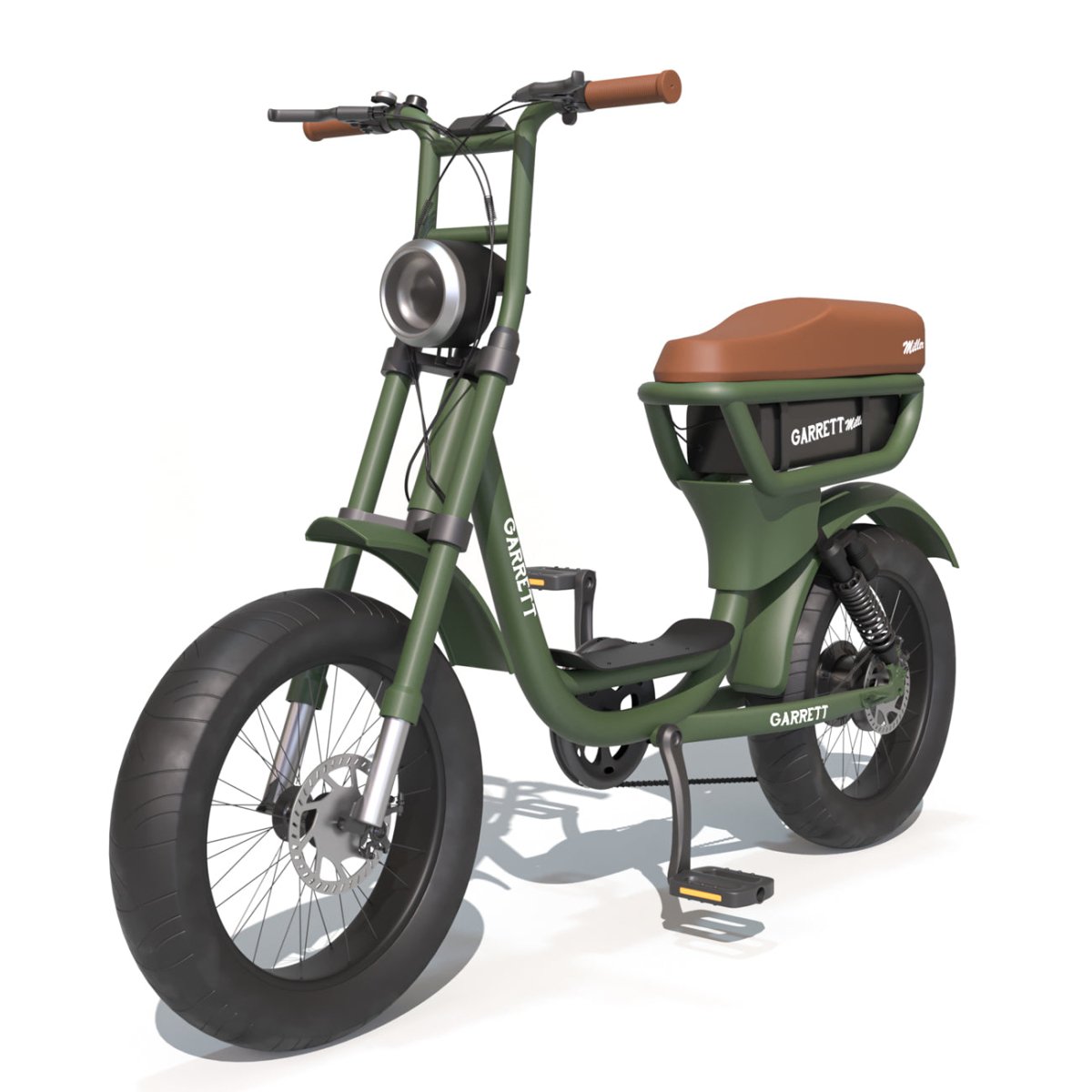
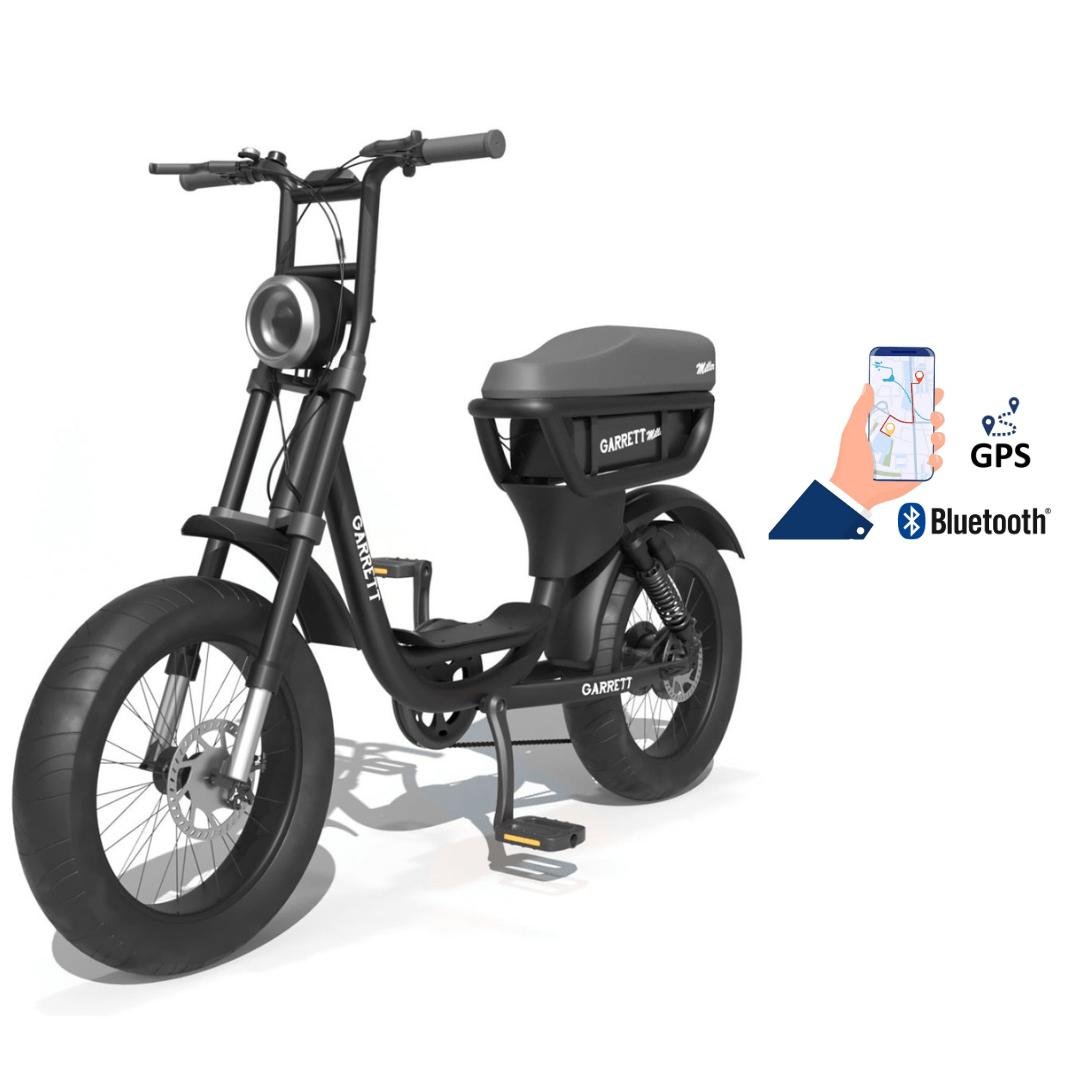
The Electric Assisted Bike is heavy: TRUE and FALSE
It is true that an electric bike is generally heavier than a classic bike. The electric bike indeed has a battery and a motor which necessarily add weight compared to a classic bike. But since their arrival on the market, electric bikes have been equipped with increasingly lighter components.
Taking the example of lithium-ion batteries which are much lighter and more efficient than old lead batteries. The latter are even banned from sale.
More than just a simple bike with electrification added, electric bikes are specially designed to be as light as possible. Their weight has been reduced compared to previous generations and it is possible to find some under the 20 kg or even 15 kg mark.

Electric bikes are dangerous: FALSE
Although the average speed of an electric bike is higher than its non-motorized counterpart, studies show that there are not more accidents on electric bikes. If the number of accidents has increased in recent years, it is mainly due to the fact that there are more cyclists on the road.
Although the bike helmet is not mandatory, we can only recommend that you wear one for more safety.
The electric bike is for lazy people: FALSE
Although the effort required is certainly less on an electric bike, it is still false to say it is reserved for lazy people. According to statistics, electric bike users are mostly dynamic young people who prefer to do without their car to get around. The average age in France is 40 years for electric cyclists.
It is a means of transportation that both reduces travel time (on average twice as short as by car) and extends travel distances.
With an electric bike, it is much easier to cover a distance of 20 to 25 km. Where this trip would be reserved for the most athletic without a motor, it is possible to do it without fatigue on an electric bike.
Going to work on an electric bike is good for health: TRUE
According to a study published by North Carolina University, people who ride an electric bike 30 minutes a day, 5 times a week, are twice less exposed to cardiovascular diseases than others. On an electric bike, you get out of breath less quickly and reduce high blood pressure.
Electric bike commuters, or velotaf as they are called, all say that they are much more relaxed at the end of the day after returning from work on an electric bike. The same goes for the way there, where many employees admit to being more productive after this morning exercise phase.
You can also take advantage of the sustainable mobility package to get to your work by electric bike. This allows you to receive aid of up to 500 euros per year.
Riding an electric bike is therefore good both for physical health and for mental health. With the many bike lanes being created every day across the territory, it is increasingly easy to ride without the inconveniences of urban traffic.
Moreover, it is also inaccurate to say that you breathe more pollution on an electric bike. If you might believe you are more protected from pollution inside a car, that is unfortunately false. The front grille of a vehicle is closer to the exhaust pipes and consequently transmits CO2 particles inside the cabin to a greater extent.
Whereas on a bike, we are higher on the road and therefore less exposed to fine particles expelled by combustion vehicles.

Range is lacking on electric bikes: FALSE
It is often read that, as with electric cars, range is the weak point of electric bikes. While these 2 vehicles benefit from an electric motor and battery, the comparison ends there. An electric car is very heavy, often close to 2 tons.
The electric bike is much lighter and is only coupled with electric assistance. It is therefore much less energy-consuming to propel an electric bike with a small 250W motor than to move a heavy load of an electric car at much higher speeds.
Today many bikes offer a range between 50 km and up to 200 km thanks to a battery of about 500Wh.
Beware of cheap electric bikes with very small batteries
You still have to be wary of entry-level electric bikes which often have a battery of 8Ah and less. The battery being the most expensive component of an electric bike, some manufacturers take advantage of this to offer attractive prices.
But with this kind of low-quality accumulators and controller, you will then only have a low range of about 20 to 40 km in the best case. While offering a low range may be enough for some, another problem is also quality. A no-name battery will wear out much faster over time.
How is the range announced by manufacturers calculated?
It is also quite complicated to calculate the range of an electric bike. The manufacturer generally announces a usage capacity often higher than what most users experience. It should be understood that the range depends on many parameters. The supported weight, the assistance level, the maximum speed, as well as the route greatly influence the use of a motor.
Manufacturer data is mainly established at the lowest assistance level with a cyclist weight of about 60 to 70 kg.
No need to recharge the battery when braking and going downhill
The argument for an electric bike no longer relies on its battery regenerative capacity today. Regenerative braking is often far too costly compared to the additional range generated. Riding a bike being quite different from an electric scooter or an electric scooter, it is of little interest and has therefore gradually been removed from electric bikes.

The electric bike battery is polluting: FALSE
Lithium-ion batteries are now all recyclable. Many cyclists are sensitive to environmental issues. It is therefore normal to want to ensure the recycling of old batteries once used.
Batteries at Weebot are recycled
At Weebot we are sensitive to the cause and we commit to taking back used batteries for recycling. As providers of ecomobility solutions, we are fully engaged in the sustainability process of our machines.
Electric bikes are stolen more often: FALSE
The risk of theft is not higher than a classic bike. The key is mainly to secure your bike well when locking it. Removing the battery as well as the digital display from the handlebar can even discourage thieves who will then have more difficulty reselling it.
Mandatory marking of new bikes against theft
To fight against theft, it has been mandatory since January 2021 for retailers to offer engraving or marking on new electric bikes. At Weebot, we have selected the offer from the lock manufacturer Auvray with its ICA Bike tamper-proof labels.
This makes it easier to find your electric bike in case of theft. With a unique identification code registered in a national database, your bike can easily be identified to be returned to you.
The crank motor is more efficient: Partly TRUE
It is common to read about the superiority of a central motor in the crank compared to a motor in the rear or front wheels. The advantage of a crank motor is to offer better acceleration torque.
Unlike an electric bike with a motor in the rear wheel, the crank motor tends to support the pedaling motion of the cyclist more thanks to the pedaling sensor.
However, a rear motor is not necessarily bad on a two-wheeler. It allows for a more attractive price while offering a good level of power for the electric assistance of a bike. Motors in the rear wheel of an electric bike have just as good a lifespan and require no maintenance to ride all year round.
The electric bike is expensive: TRUE and FALSE
If the starting price of an electric bike may seem expensive, it should be considered that it is the most economical means of transportation currently.
When purchasing an electric bike, it is possible to benefit from a subsidy of up to 500 euros on the price.
In addition, the Sustainable Mobility Package allows you to get up to 500 euros per year to commute to work by electric bike. No more paying a monthly subscription for public transport. No more paying high fuel costs. It is generally estimated that charging a battery costs just a few cents.
Besides being pleasant, this makes the electric bike an excellent means of daily transportation.

Conclusion on the electric bike
The level of electric assistance of a bike is ideal for urban travel. This modern and ecological means of transport allows us to transform our mode of travel. With the permanence of bike lanes, it is important to take advantage of them to reduce our pollution. The electric bike is no longer just the future but already the present.
More and more users are trading their cars for cargo bikes which are booming in 2021. With a sales increase of more than 354% compared to the previous year, the cargo bike allows you to transport equipment, but also your children in an extremely practical way.
Feel free to check out our various articles on how to choose an electric bike, as well as our buying guides on the electric mountain bike or the folding electric bike.
